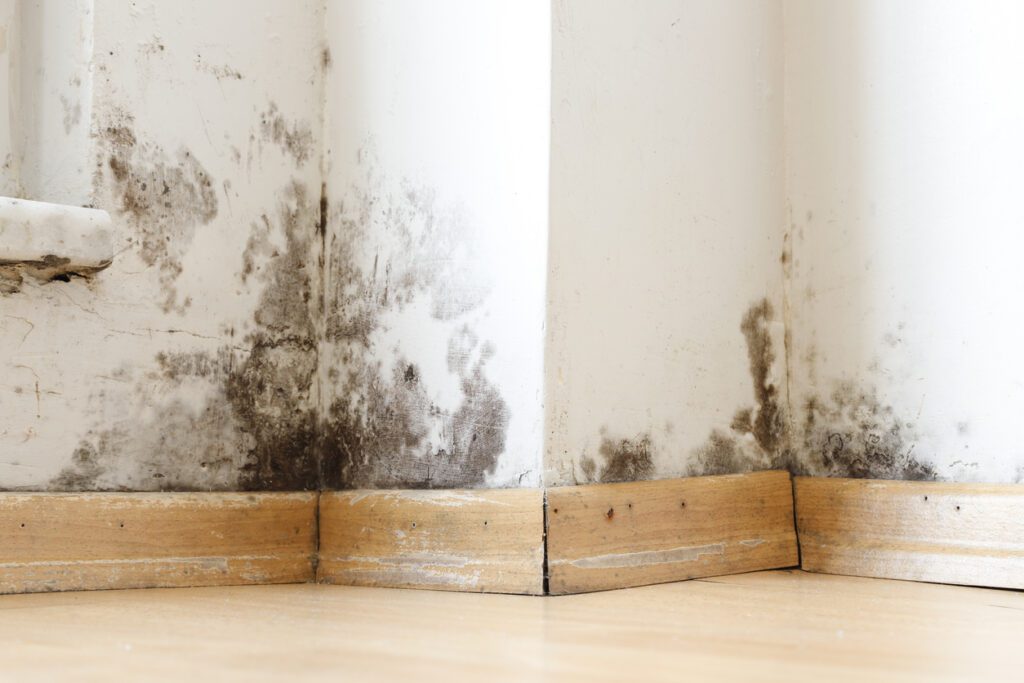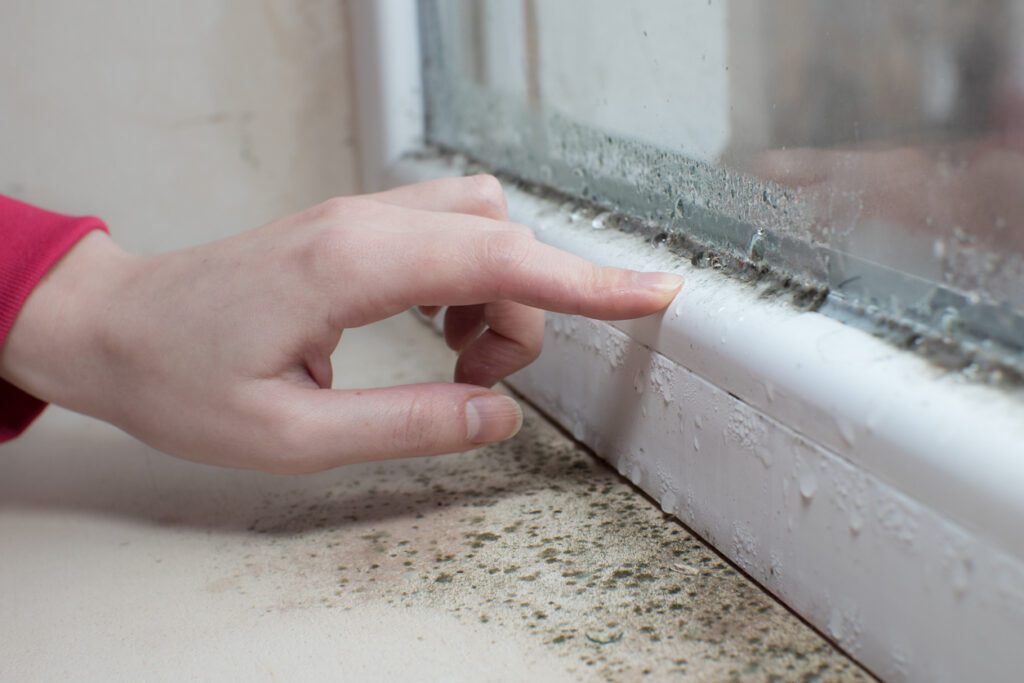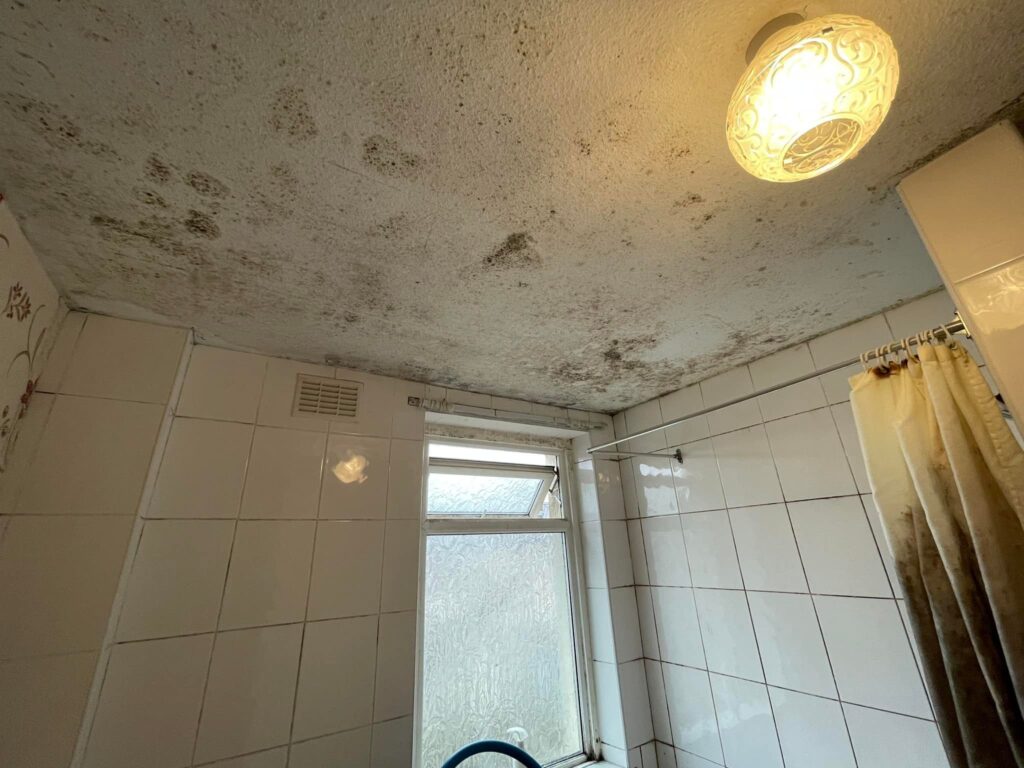
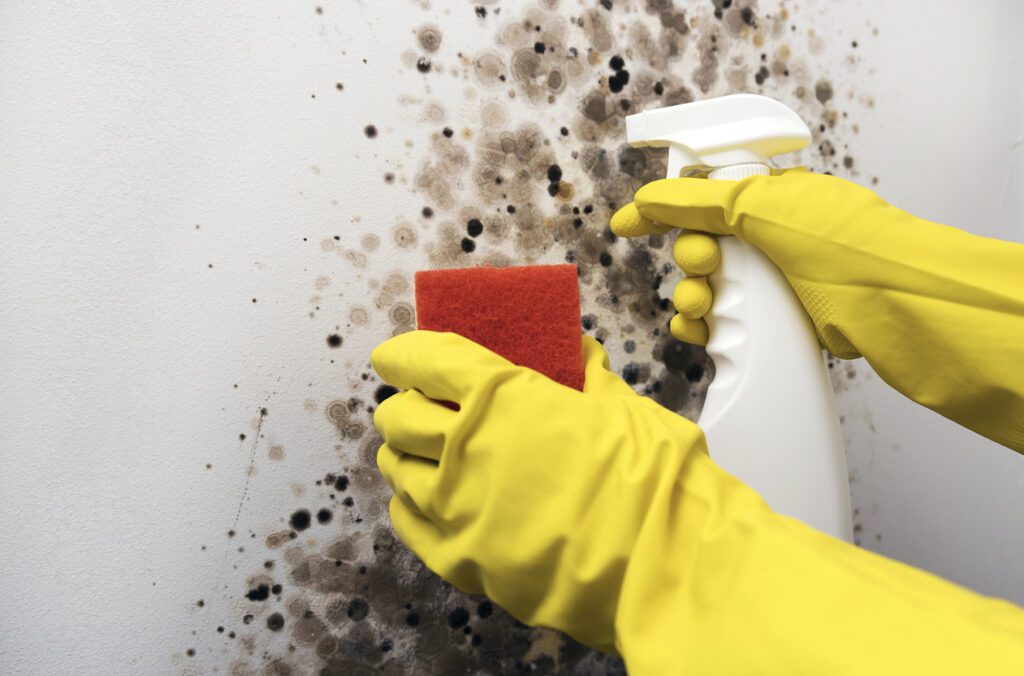
Black mould is one of the most common problems homeowners encounter when excess moisture builds up inside a property. It often appears on ceilings, around window frames, on bathroom tiles and in corners where condensation regularly forms. When mould becomes visible, many people attempt to remove it with household cleaning products, with bleach among the most widely used solutions.
At first, bleach may appear to solve the problem. The dark staining fades, and the affected surface looks clean again. However, in many homes, the mould returns within weeks or months. This leads many homeowners to wonder why cleaning the mould repeatedly does not stop it from coming back. The reason is that bleach rarely addresses the underlying conditions that allow mould to grow. In most situations, it removes the visible surface staining without eliminating the mould contamination beneath.
Why Black Mould Develops in Homes
Mould growth always begins with excess moisture inside a property. When warm air containing water vapour comes into contact with colder surfaces, condensation forms. Over time, this moisture creates damp conditions that allow mould spores to grow on walls, ceilings and other materials.
Many UK homes experience mould problems because everyday activities generate significant humidity. Cooking, showering, drying clothes indoors, and even breathing (can you believe it), all contribute to indoor moisture levels. When ventilation is limited, or humidity remains high, moisture accumulates on cold surfaces, creating an ideal environment for mould to develop.
Once these damp conditions are present, mould spores naturally settle and begin growing. Small patches may initially appear around windows or in corners before gradually spreading across larger areas of a room.
The environmental conditions that allow mould to develop are explained in greater detail in our guide on what causes black mould in homes, which explores the role of condensation, humidity and ventilation problems in mould growth.
Understanding the causes of mould is essential, as removing the visible growth alone will not prevent it from returning if moisture remains.
What Happens When Bleach Is Used on Mould
Bleach is commonly used because it can lighten the dark stains left by mould on surfaces such as paint, plaster or tile grout. When applied to the affected area, the chemical reaction breaks down the mould’s pigment, making the surface appear cleaner.
However, mould growth rarely remains only on the surface of a material. Mould develops microscopic roots that penetrate porous surfaces such as plaster, wood, silicone sealant and paint. These structures remain embedded within the material even after the visible mould is removed.
When bleach is applied to these surfaces, it may remove the staining but often fails to destroy the mould structures beneath the surface. As a result, mould spores can continue to develop within the material and eventually reappear when moisture conditions return.
Another factor is that bleach solutions contain a significant amount of water. When applied to porous materials, this moisture can soak into the surface and contribute to the damp conditions that mould requires to grow again.
Why Mould Often Returns After Cleaning
Many homeowners are surprised when mould returns shortly after cleaning. This usually occurs because the underlying environmental conditions that allowed the mould to develop have not been resolved.
Condensation forming on cold walls, poor ventilation in bathrooms and kitchens, high humidity levels and hidden damp areas behind furniture can all contribute to recurring mould problems. If these conditions remain unchanged, mould spores will continue to spread through the air and settle on surfaces throughout the property.
Cleaning visible mould without addressing the moisture source is like treating a symptom without addressing the cause. The mould may temporarily disappear, but the conditions that allow it to grow remain.
Homeowners dealing with small mould patches often attempt various cleaning methods before seeking further advice. Our article explaining how to get rid of black mould safely explores some of the approaches people commonly try when dealing with mould for the first time.
When mould continues to return despite cleaning attempts, it often indicates a deeper moisture issue inside the property.
Why Surface Cleaning Is Not Always Enough
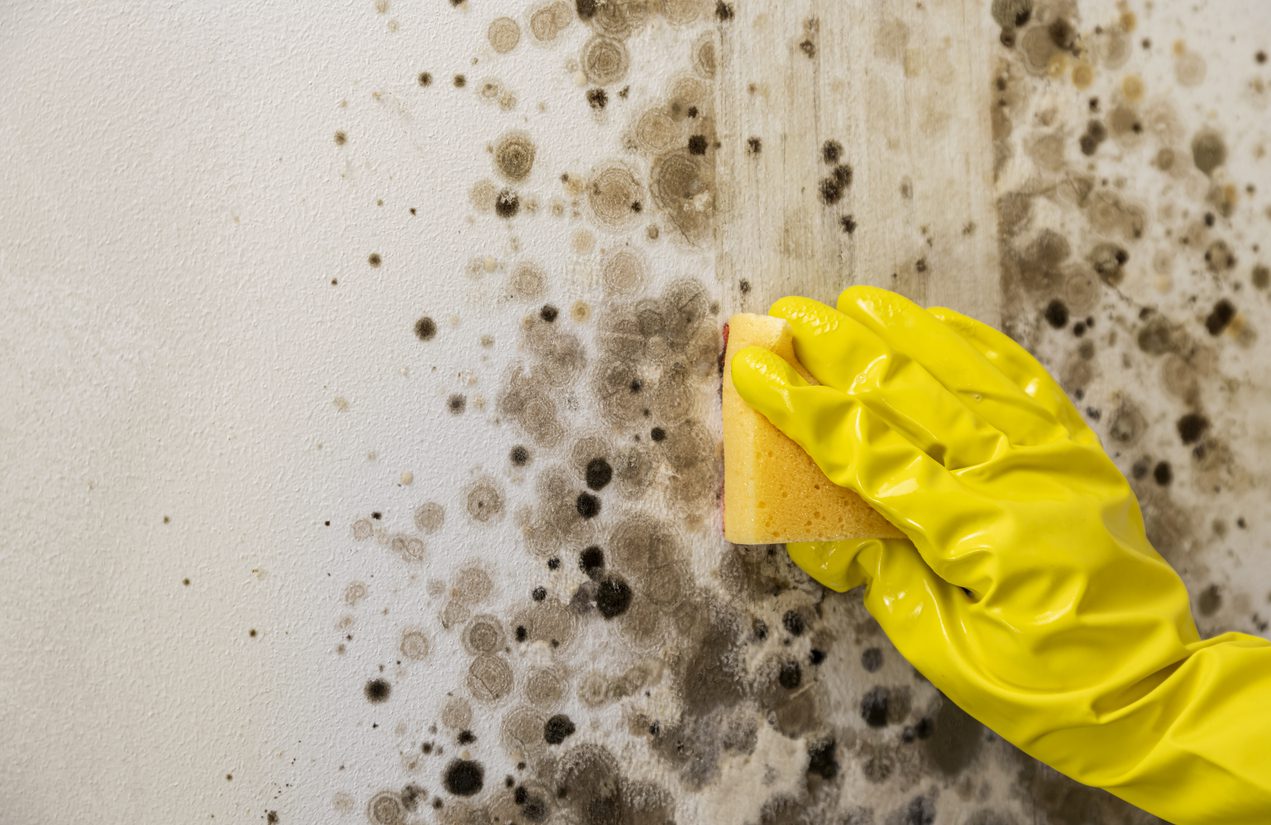
Small isolated mould patches can sometimes be cleaned safely if the affected area is limited and the moisture source has already been resolved. However, mould problems often spread more widely than they appear at first.
Because mould reproduces by releasing microscopic spores into the air, contamination can spread beyond the original location. These spores settle on surfaces throughout the property, creating new areas of mould growth.
Over time, this can lead to mould developing on ceilings, behind furniture, in cupboards, and along external walls. When contamination spreads in this way, surface cleaning alone cannot control airborne spores or remove mould embedded within materials.
How Professional Mould Remediation Differs
Professional mould remediation focuses on removing contamination while controlling environmental conditions that support mould growth. Rather than simply cleaning visible mould, remediation addresses the entire mould problem within the property.
This process often involves identifying moisture sources, controlling airborne spores and safely treating affected surfaces using specialist equipment and filtration systems. Techniques such as HEPA filtration can capture microscopic mould spores during treatment, helping prevent contamination from spreading further.
Where mould contamination has spread throughout a room or multiple areas of a property, a structured professional mould removal and remediation process may be required to restore a clean indoor environment and reduce the likelihood of mould returning.
Preventing Black Mould From Returning
Long-term mould prevention depends on managing moisture levels inside the property. Improving ventilation and reducing indoor humidity can significantly limit the conditions that allow mould to develop.
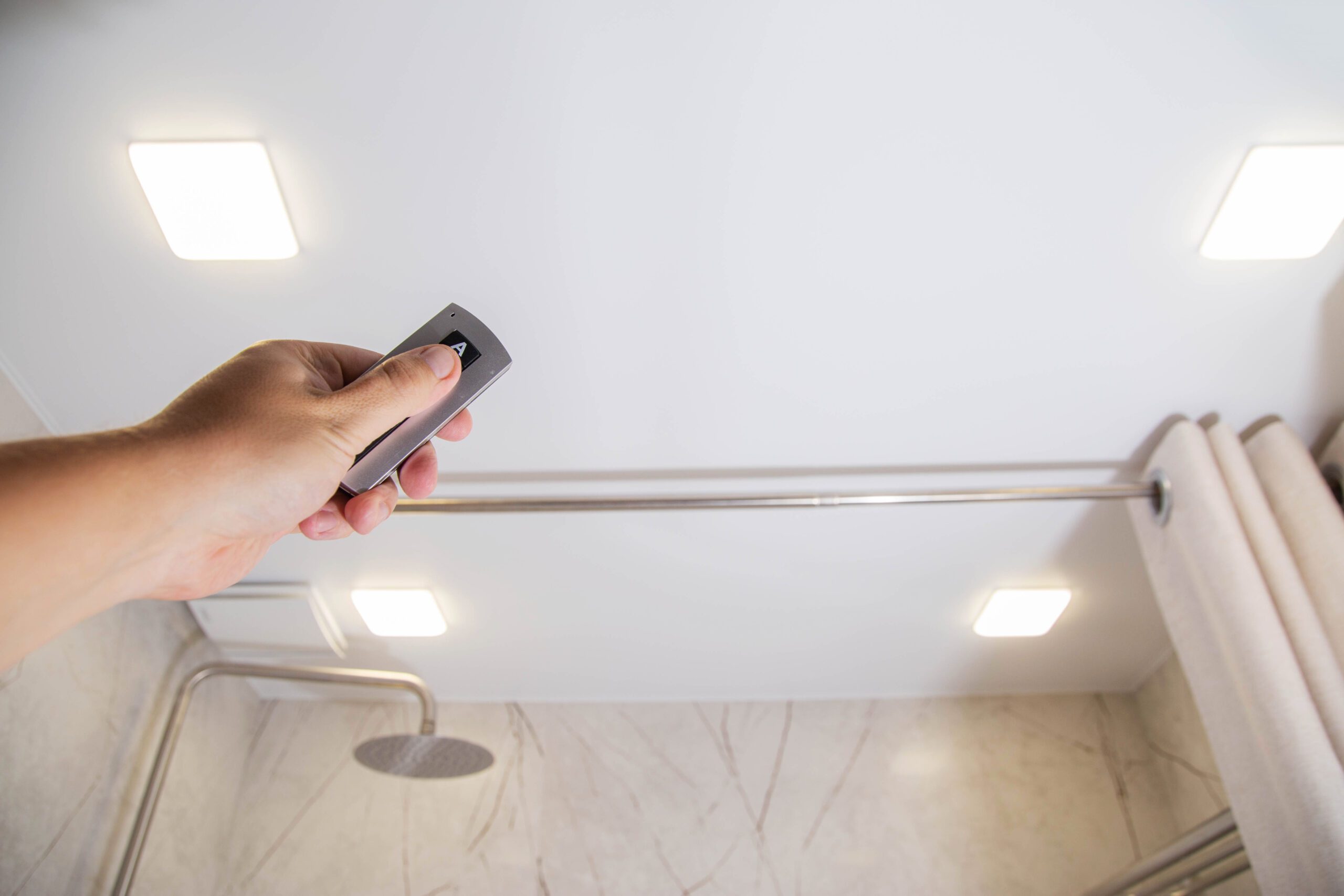
Maintaining consistent heating during colder months can reduce condensation forming on walls and ceilings. Ensuring extractor fans function effectively in kitchens and bathrooms can also help remove moisture before it accumulates.
Allowing air to circulate around furniture placed against external walls can prevent damp areas from forming in hidden spaces where mould often spreads unnoticed.
In properties with severe condensation problems, ventilation improvements may be required to effectively control humidity levels.
Addressing Mould Problems Properly
Black mould rarely disappears permanently through surface cleaning alone. When moisture conditions persist, mould spores will continue to spread and grow across the property.
Addressing mould properly involves identifying the source of moisture, improving ventilation and ensuring contamination is removed safely so spores do not continue circulating through the home.
By tackling mould problems early and addressing the environmental conditions that support mould growth, homeowners can prevent recurring mould issues and restore healthier indoor conditions.
Frequently Asked Questions About Bleach and Black Mould
Does bleach kill black mould permanently?
Bleach may remove visible mould staining, but it rarely eliminates mould growth completely. Because mould can grow within porous materials such as plaster and wood, bleach often fails to destroy the mould structures beneath the surface. If moisture conditions remain present, mould will often return.
Why does mould keep coming back after using bleach?
Mould returns when the environmental conditions that allow it to grow remain unchanged. Condensation, poor ventilation and high humidity can all create damp conditions inside a property. Without addressing these moisture problems, mould spores will continue to spread and develop.
Is bleach the best way to remove mould from walls?
Bleach may lighten mould stains on hard surfaces, but it is not always effective on porous materials such as painted walls or plaster. When mould contamination becomes widespread, a structured remediation approach may be required to remove contamination and control airborne spores.
When should mould be professionally removed?
Professional mould remediation may be required when mould spreads across large areas, recurs after cleaning, or produces a persistent musty odour inside the property. Specialist treatment focuses on removing contamination while identifying the moisture conditions, allowing mould to develop.