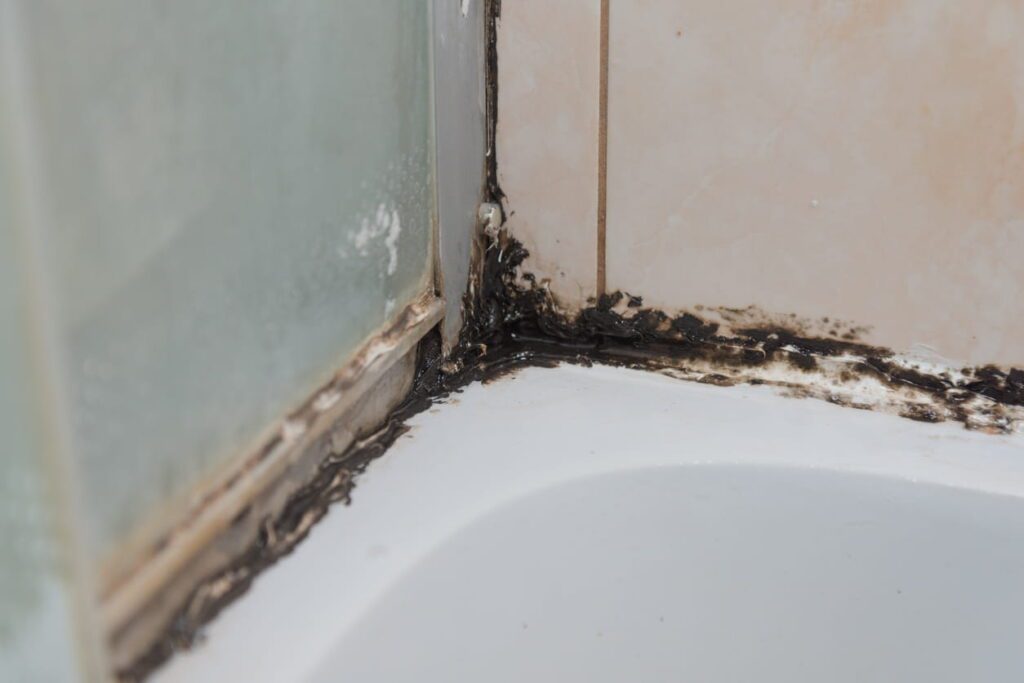
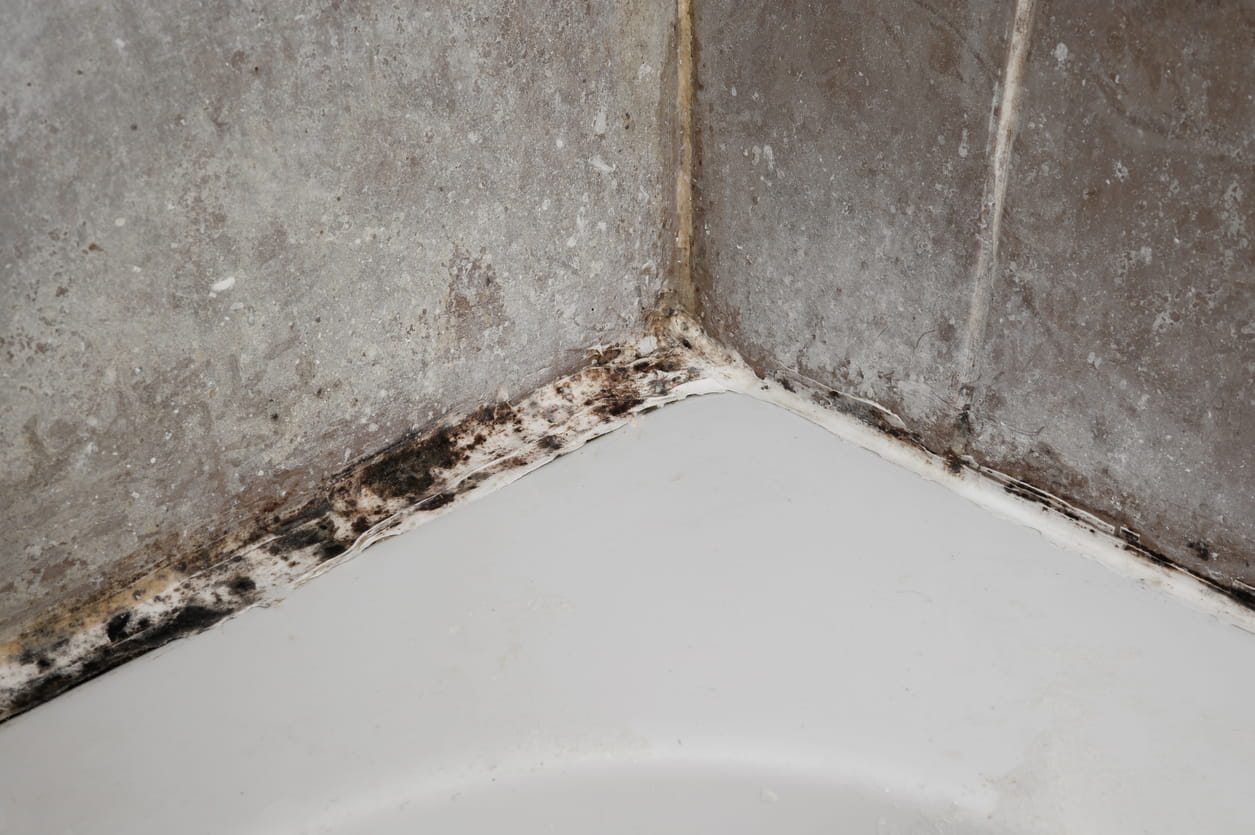
Black marks around your shower tray or bath can make the bathroom look unclean, even when you regularly look after it. If your shower sealant keeps turning black, mould is a likely explanation. Persistent moisture and residue can create conditions that allow it to develop along the silicone.
At Mould Removal Northwest, we help homeowners understand why bathroom mould keeps returning. The sealant may be the most obvious affected area, but the problem can involve ventilation, slow drying or damaged joints. Understanding what’s happening is an important step towards addressing it properly.
Why Does Black Mould Grow on Shower Sealant?
Showers regularly expose sealant to water, warmth and humidity. When the area stays damp between uses, mould has more opportunity to grow. Corners and joints can be particularly vulnerable because water collects there and takes longer to evaporate.

Soap, shampoo and other residues can also build up along the sealant, providing material for mould to grow. This doesn’t necessarily mean your bathroom is poorly maintained. The design of the shower and how effectively the room dries both matter.
At Mould Removal Northwest, we consider the wider bathroom conditions alongside the visible growth. Blackened silicone alone cannot tell us whether the main issue is lingering surface moisture, inadequate extraction or a joint that needs further attention.
Persistent Moisture Creates Suitable Conditions for Mould
A bathroom doesn’t have to look constantly wet to have a moisture problem. Small amounts of water can remain around shower fittings long after surrounding tiles appear dry. Factors that may contribute include:
- Water collecting along shower tray edges.
- Corners that receive little air movement.
- Frequent showers with limited drying time between uses.
- Ineffective bathroom extraction.
- Condensation forming on colder surfaces.
These conditions help explain why the same section of sealant can repeatedly develop black spots. Addressing visible mould without understanding the moisture conditions may leave the cause of its recurrence unresolved.
Mould-Resistant Sealant Still Has Limitations
Bathroom sealants are often described as mould-resistant because their formulations help inhibit fungal growth. Manufacturers produce sanitary silicones specifically for humid environments. However, choosing a product with this description doesn’t remove the need to consider the conditions around the joint.
Persistent dampness and surface deposits can still pose problems. If recently fitted sealant starts turning black, it is worth investigating rather than assuming the product alone is responsible. The suitability of the sealant, its installation, and the bathroom environment may all need to be considered.
Can Poor Ventilation Make Shower Mould Worse?
Yes. Without effective ventilation, moisture from showering can remain in the bathroom, contributing to condensation. Windows, walls, and ceilings may show signs of dampness, while the shower enclosure itself remains damp for longer. The presence of an extractor fan doesn’t automatically mean it is performing effectively.
Airflow, the fan’s condition and how the extraction system is installed can affect its performance. If black mould appears beyond the sealant, the bathroom may need a wider ventilation assessment. Understanding the room as a whole helps avoid focusing only on the most noticeable patch.
Does Black Sealant Mean There Is a Leak?
Blackened sealant does not automatically mean water is leaking behind the shower. Surface mould can develop where moisture regularly lingers. However, silicone that has split, lifted or separated from adjoining surfaces may no longer provide an effective seal.
Where damage is present, the joint and surrounding materials deserve attention. Certain signs may suggest that further investigation is needed alongside mould treatment:
- Gaps between the sealant and shower tray.
- Silicone pulling away from tiles.
- Damp staining in an adjoining room.
- Water marks on the ceiling below.
- Persistent dampness outside the shower enclosure.
At Mould Removal Northwest, we can discuss the affected areas and explain whether the visible problem may need additional investigation. Any suspected leak or failed joint needs appropriate assessment, rather than being treated as a cosmetic issue.
Recurring Bathroom Mould Deserves Professional Attention
When black spots keep returning, it can be difficult to know whether you are seeing fresh growth, lasting staining or a combination of both. Appearance alone doesn’t reliably establish the extent of the problem or the condition of the sealant.
Professional assessment helps clarify what needs attention. Depending on the findings, mould treatment, ventilation improvements or repairs by a suitable tradesperson may be appropriate. This gives you clearer next steps without assuming every blackened shower joint has the same cause.
Address Black Mould In Your Bathroom With Mould Removal Northwest – Contact Us Now
If your shower sealant keeps turning black, Mould Removal Northwest can help assess your bathroom mould concerns. We provide professional mould treatment and consider the conditions that may be contributing to recurring growth.
Contact Mould Removal Northwest today to discuss the problem and arrange a quote. We’ll explain how we can help, with straightforward advice about any further investigation needed.